Product design for a cross-border payments app, a marketplace and its business tools, a social gaming platform and a music library. Each case study covers the problem, the research, the decisions and what changed.
Case studies
3 products, each with the problem, the research, the decisions and the measured result. Every card opens its case study.
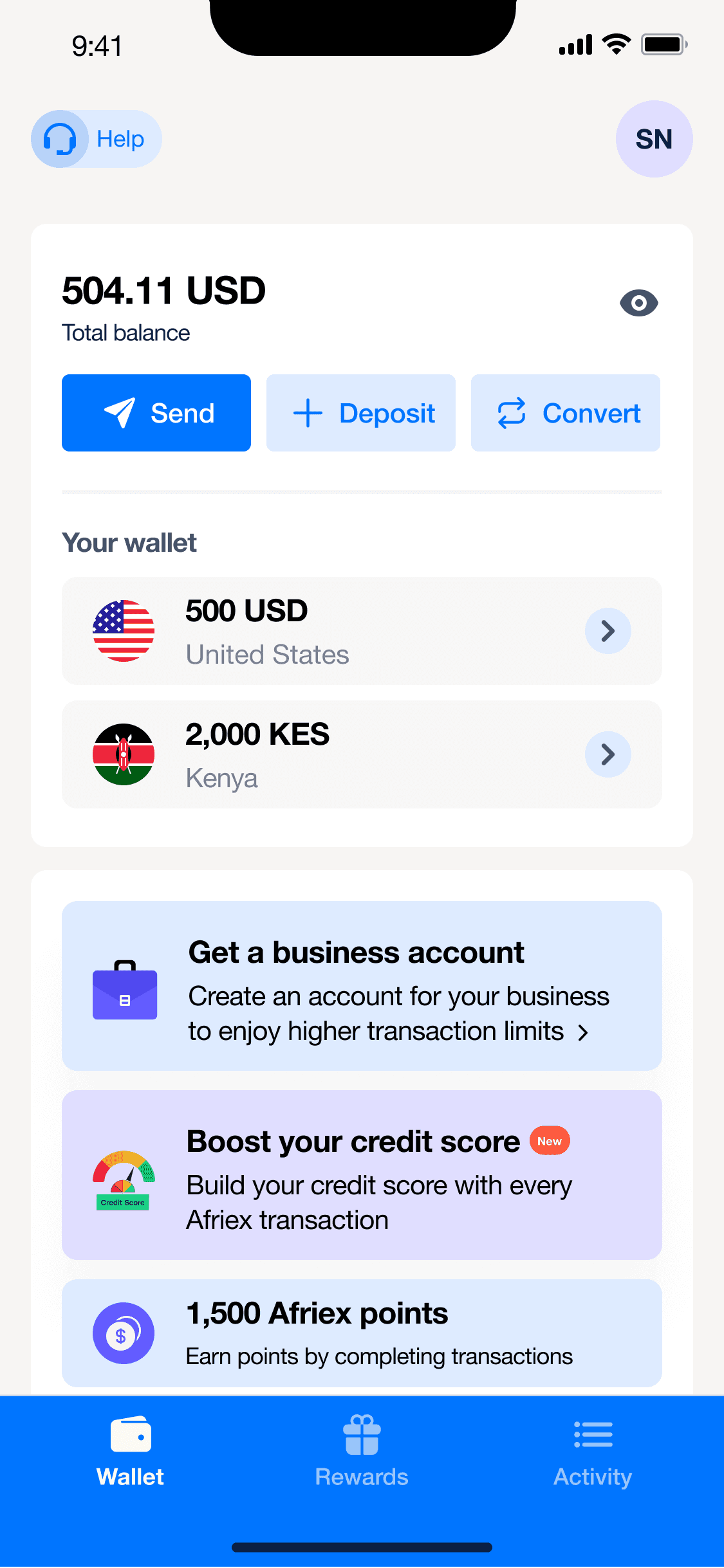
Afriex is a money transfer app for Africans at home and abroad. For most of my time there I was the only product designer, responsible for the consumer app on iOS and Android and for the business and operations tools behind it.
Konga is a Nigerian marketplace where many merchants sell into one basket. Over 4 years I improved the parts shoppers already used and built tools that did not exist yet for the people running the business, alongside other designers, product managers, engineers, merchandisers and operations staff.
Product designer·Web, mobile web, iOS, Android, POS
Josplay was building the African Music Library, a knowledge base of African music. My part was the user research and information architecture: who comes to the library, what it holds, and the paths people take through it. Ibkay designed the web UI from that research, and I supported some of the responsive mobile UI.
User research and information architecture·Web and responsive mobile
Review of 5 comparable libraries
Mental models and user stories
Entity model and sitemap
Task flows and low-fidelity screens
Usability testing with 7 participants
Task flow, use the AML search feature
What held
Browse by artist, genre and instrument: each has its own pages on the live library
What changed
The live library has no paywall. AML runs as a nonprofit, funded mainly by donations.
Game360 is a social gaming platform I designed from research to beta launch; its link opens the app on Google Play. Below it, the smaller pieces from Konga and Afriex, each described in its case study.
Other work
Game360
A social gaming platform: multiplayer games, tournaments and live matches with voice chat. I designed the mobile app and the operations admin, from research and MVP scope to the design system and beta launch.
Lead product designer, sole designer·October 2025 to March 2026·Visit Game360
Home: tournaments, games, challenges and live streamsA live match: the host's stream, gifts and chatAdmin: managing tournaments alongside the games catalog, rules and scoringA live tournament's details and prize split
Also designed
Konga
Seller HQ
The back office for merchants: I designed its responsive mobile view and the redesigned onboarding. Ibkay designed the web dashboard.
Audit of the old portal, information architecture, wireframes and the main dashboard for web and responsive mobile.
Konga
KongaPay website redesign
An overview of KongaPay with dedicated pages for its business and personal offerings.
Konga
POS terminal
Requesting a terminal, activation, wallet, collections by card, transfer, QR or cash, receipts and the end-of-day report.
Konga, explorations
Gift cards, loyalty scheme, Konga Logistics mobile client
Directions mapped against the business requirements: the gift card purchase flow, 5 reward directions mapped against the PRD, and an MVP for booking a delivery.
Afriex
Afriex Business
Structured sign-up for compliance, larger transfers with a record of each step, roles and permissions, API keys and webhooks.
Afriex
Operations dashboard and support site
Restructured transaction data, filters and statuses for operations and support; a help centre that reduced general inquiries.
How I work
How I approach product design across products and teams: the evidence I work from, how decisions get made and recorded, and what shipping properly means.
Case studies, other projects and how I work
Product design for a cross-border payments app, a marketplace and its business tools, a social gaming platform and a music library. Each case study covers the problem, the research, the decisions and what changed.
Case studies
3 products, each with the problem, the research, the decisions and the measured result. Every card opens its case study.
Afriex is a money transfer app for Africans at home and abroad. For most of my time there I was the only product designer, responsible for the consumer app on iOS and Android and for the business and operations tools behind it.
Konga is a Nigerian marketplace where many merchants sell into one basket. Over 4 years I improved the parts shoppers already used and built tools that did not exist yet for the people running the business, alongside other designers, product managers, engineers, merchandisers and operations staff.
Product designer·Web, mobile web, iOS, Android, POS
Josplay was building the African Music Library, a knowledge base of African music. My part was the user research and information architecture: who comes to the library, what it holds, and the paths people take through it. Ibkay designed the web UI from that research, and I supported some of the responsive mobile UI.
User research and information architecture·Web and responsive mobile
Review of 5 comparable libraries
Mental models and user stories
Entity model and sitemap
Task flows and low-fidelity screens
Usability testing with 7 participants
Task flow, use the AML search feature
What held
Browse by artist, genre and instrument: each has its own pages on the live library
What changed
The live library has no paywall. AML runs as a nonprofit, funded mainly by donations.
Game360 is a social gaming platform I designed from research to beta launch; its link opens the app on Google Play. Below it, the smaller pieces from Konga and Afriex, each described in its case study.
Other work
Game360
A social gaming platform: multiplayer games, tournaments and live matches with voice chat. I designed the mobile app and the operations admin, from research and MVP scope to the design system and beta launch.
Lead product designer, sole designer·October 2025 to March 2026·Visit Game360
Home: tournaments, games, challenges and live streamsA live match: the host's stream, gifts and chatAdmin: managing tournaments alongside the games catalog, rules and scoringA live tournament's details and prize split
Also designed
Konga
Seller HQ
The back office for merchants: I designed its responsive mobile view and the redesigned onboarding. Ibkay designed the web dashboard.
Audit of the old portal, information architecture, wireframes and the main dashboard for web and responsive mobile.
Konga
KongaPay website redesign
An overview of KongaPay with dedicated pages for its business and personal offerings.
Konga
POS terminal
Requesting a terminal, activation, wallet, collections by card, transfer, QR or cash, receipts and the end-of-day report.
Konga, explorations
Gift cards, loyalty scheme, Konga Logistics mobile client
Directions mapped against the business requirements: the gift card purchase flow, 5 reward directions mapped against the PRD, and an MVP for booking a delivery.
Afriex
Afriex Business
Structured sign-up for compliance, larger transfers with a record of each step, roles and permissions, API keys and webhooks.
Afriex
Operations dashboard and support site
Restructured transaction data, filters and statuses for operations and support; a help centre that reduced general inquiries.
How I work
How I approach product design across products and teams: the evidence I work from, how decisions get made and recorded, and what shipping properly means.
Case studies, other projects and how I work
Product design for a cross-border payments app, a marketplace and its business tools, a social gaming platform and a music library. Each case study covers the problem, the research, the decisions and what changed.
Case studies
3 products, each with the problem, the research, the decisions and the measured result. Every card opens its case study.
Afriex is a money transfer app for Africans at home and abroad. For most of my time there I was the only product designer, responsible for the consumer app on iOS and Android and for the business and operations tools behind it.
Konga is a Nigerian marketplace where many merchants sell into one basket. Over 4 years I improved the parts shoppers already used and built tools that did not exist yet for the people running the business, alongside other designers, product managers, engineers, merchandisers and operations staff.
Product designer·Web, mobile web, iOS, Android, POS
Josplay was building the African Music Library, a knowledge base of African music. My part was the user research and information architecture: who comes to the library, what it holds, and the paths people take through it. Ibkay designed the web UI from that research, and I supported some of the responsive mobile UI.
User research and information architecture·Web and responsive mobile
Review of 5 comparable libraries
Mental models and user stories
Entity model and sitemap
Task flows and low-fidelity screens
Usability testing with 7 participants
Task flow, use the AML search feature
What held
Browse by artist, genre and instrument: each has its own pages on the live library
What changed
The live library has no paywall. AML runs as a nonprofit, funded mainly by donations.
Game360 is a social gaming platform I designed from research to beta launch; its link opens the app on Google Play. Below it, the smaller pieces from Konga and Afriex, each described in its case study.
Other work
Game360
A social gaming platform: multiplayer games, tournaments and live matches with voice chat. I designed the mobile app and the operations admin, from research and MVP scope to the design system and beta launch.
Lead product designer, sole designer·October 2025 to March 2026·Visit Game360
Home: tournaments, games, challenges and live streamsA live match: the host's stream, gifts and chatAdmin: managing tournaments alongside the games catalog, rules and scoringA live tournament's details and prize split
Also designed
Konga
Seller HQ
The back office for merchants: I designed its responsive mobile view and the redesigned onboarding. Ibkay designed the web dashboard.
Audit of the old portal, information architecture, wireframes and the main dashboard for web and responsive mobile.
Konga
KongaPay website redesign
An overview of KongaPay with dedicated pages for its business and personal offerings.
Konga
POS terminal
Requesting a terminal, activation, wallet, collections by card, transfer, QR or cash, receipts and the end-of-day report.
Konga, explorations
Gift cards, loyalty scheme, Konga Logistics mobile client
Directions mapped against the business requirements: the gift card purchase flow, 5 reward directions mapped against the PRD, and an MVP for booking a delivery.
Afriex
Afriex Business
Structured sign-up for compliance, larger transfers with a record of each step, roles and permissions, API keys and webhooks.
Afriex
Operations dashboard and support site
Restructured transaction data, filters and statuses for operations and support; a help centre that reduced general inquiries.
How I work
How I approach product design across products and teams: the evidence I work from, how decisions get made and recorded, and what shipping properly means.